
Vendors in the mid-market maintain a balance between quality and cost, providing testing documentation while ensuring their pricing remains competitive. Higher prices are typically charged by these suppliers, reflecting their commitment to quality systems. This analysis utilizes documentation that is available (community reports), and systematic evaluation criteria relevant to any peptide supplier. Most protocols run 8-12 weeks, followed by 4-8 weeks off. The ability to adjust dose ratios is enabled by individual peptides; sources from the community indicate this preference is common when using fewer than all four components.
Users commonly report significant improvements in their primary goals as the cumulative benefits of consistent dosing become evident. Users may experience accelerated progress in healing protocols, reporting a quicker resolution of injuries compared to prior experiences. The introduction of multiple additional compounds complicates the process, making it difficult to determine what is effective or problematic. If daily administration is not feasible (consider protocols that explicitly incorporate off days), such as five days on and two days off. It is advisable to begin at the lower end of the dosing range and gradually increase.
Channel Price Details Source: Better Med Spa (standard protocol) $400 for 4 weeks; $690 for 8 weeks in Lincoln Park, Chicago, or telehealth services anywhere in Illinois; aimed at general recovery, gut support, inflammation; the 8-week option offers a savings of $110.
Better Med Spa (injury protocol) $600 for 4 weeks; $1,040 for 8 weeks, featuring a higher-dose protocol for acute injury or post-surgical recovery; 8-week option saves $160. Hormone Treatment Centers (Overland Park, KS; Lee’s Summit, MO) Contact for pricing, with the KLOW protocol described as GLOW plus KPV, requiring a phone consultation. BeyondMD , BPC-157/KPV/TB-500 injectable, excluding GHK-Cu, starts at $199 per month, includes three of KLOW’s four peptides with the price listed prior to provider evaluation. For pricing on six PCAC-recommended peptides combined (refer to Post-PCAC 503A peptide pricing 2026), and for the three-peptide base see GLOW blend pricing. The date of verification for each provider’s sticker price is indicated next to the price. Every cost is averaged to reflect a standard 3-month protocol, which our medical advisors regard as the best basis for evaluating cost and value; the total includes any one-time consultation or provider-review fees along with three months of membership. Products sold outside of a licensed pharmacy system are not verified for identity (purity), or sterility. Receive one email when the Klow (GHK-Cu / BPC-157 / TB-500 / KPV) price from a verified provider drops or a safety alert is issued.
They collectively tackle “leaky gut” by simultaneously reducing inflammation and repairing the damaged intestinal lining. Results can be achieved with a properly verified research compound. For any of these applications, sourcing KLOW prioritizes quality over price.

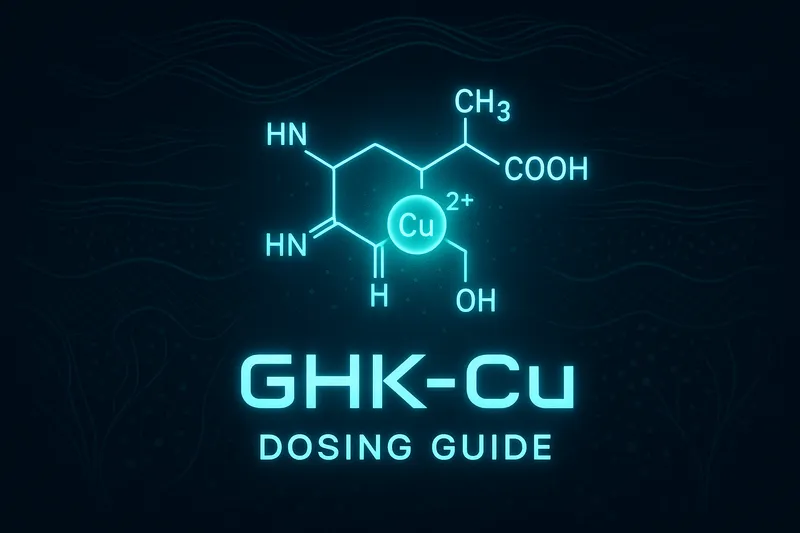
Once reconstituted, standard practice entails storing the solution in a refrigerator at temperatures between 2°C and 8°C, treating it as short-lived. For subjective endpoints such as histology grading and wound measurement, blinding of outcome scoring is crucial, as unblinded assessments can artificially increase effect size. The presence of redox-active metal can catalyze the oxidation of susceptible residues, which should be considered when evaluating the stability of the mixture over time. The complex exhibits a distinctive blue color in solution, and the copper is maintained in a specific coordination geometry, whose stability relies on pH levels and competing chelators within the surrounding buffer. Inflammation studies usually measure cytokines (including TNF-alpha), IL-6, and IL-1beta, in culture supernatants or tissue homogenates, often alongside assays for NF-kB nuclear translocation or reporter constructs. The background information on the compounds is gathered in the history overview (beginners guide), and discussion on multi-peptide synergy.
Klow Peptides pricing structure
A percentage lacking a method and date is merely a number entered by someone, while a certificate that includes all tests but corresponds to a different lot number than the vial represents one of the most common failures and is the easiest to identify. Therefore, a mass spectrum of the vial reveals four distinct masses, while a certificate that lists a single number for the entire vial has failed to identify anything accurately. Please save my name, email, and website in this browser for future comments.
KPV: The Anti-Inflammatory Tripeptide
Thus, a documented and date-stamped comparison serves as the practical benchmark. For a broader understanding of how service-based healthcare pricing might include costs beyond the initial amount — consult this explanation regarding hidden expenses in concierge medicine. Sometimes, searchers equate research materials with supervised clinical services or wider wellness programs. These calculations stem from advertised prices and labeled mass, rather than verified manufacturing costs. One listing calculates a cost of $1.81 per labeled milligram for an 80 mg vial priced at $144.99 — while another claims $1.91 per nominal milligram for a vial costing $153.
Despite the energizing properties attributed to KPV and GHK-Cu for many users, fatigue remains paradoxically common. To minimize occurrence, rotate injection sites and permit the solution to warm before administration. Such reactions occur more frequently with cold injections or if the same site is repeatedly used. Typically — redness, swelling, itching, or bruising at the injection site resolves within a few hours to a day. For practical purposes, estimate the duration a vial will last based on your dosing protocol and reconstitute accordingly. After this timeframe — peptide degradation may compromise potency even if the solution appears clear.

KLOW exists on the fringes of what current peptide research can substantiate, which is why community reports are included as an additional grade to assess the benefits experienced by those using Klow. This is not medical advice, and nothing herein endorses the purchase or self-administration of unapproved substances. Purchasing the four peptides individually typically costs between $200 and $320, representing the actual selling point of the blend. GHK-Cu contains copper — resulting in a prepared solution often appearing blue. Compounded under a patient-specific prescription by a licensed U.S. 503A compounding pharmacy. BPC-157 is banned under WADA category S0 (non-approved substances), while thymosin beta-4 derivatives, including TB-500, fall under S2 prohibition.
For other compounds, the general peptide calculator provides the same calculations. The figures below merely reflect what is reported in the research literature for each individual peptide, shared solely for educational purposes. No controlled human trial has ever assessed the side effects of this specific blend of four peptides — so there exists no verified list of adverse events for Klow itself. There are no clinical photographs (no measured timelines), and no controlled comparisons available for the combination of BPC-157, TB-500, GHK-Cu, and KPV. The evolution of the market may influence optimal vendor choices over time.