

Top 7 Lenders for a 500 Credit Score Personal Loan in 2026
Last updated: 2026-11-09
Navigating the financial landscape with a 500 credit score often feels like walking through a thick fog without a compass. When your score dips into the low hundreds, traditional banks tend to pull the shutters closed, leaving many borrowers feeling stranded and hopeless. It is a frustrating position to be in, especially when an unexpected expense—such as a sudden car repair, a medical bill, or an urgent home maintenance issue—demands immediate attention. In these moments, the pressure to act quickly can lead to impulsive decisions that jeopardize your long-term financial stability.
However, the lending market in 2026 has evolved significantly to accommodate those facing credit hurdles. The key is not just finding anyone who will say yes, but finding a partner that provides fair terms. Choosing the wrong lender, particularly one that utilizes predatory interest structures or hidden fees, can lead to a cycle of debt that is incredibly difficult to break later on. Understanding the nuances of subprime lending is the first step toward using credit as a tool for recovery rather than a weight that pulls you further down.
- JetzLoan
- Upgrade
- LendingPoint
- Avant
- OneMain Financial
- OppLoans
- Elite Personal Finance
How These Lenders Were Evaluated
The selection process focused on accessibility for individuals with subprime credit profiles. Since a 500 score is a significant red flag for many automated systems, the primary metric was the ability to look beyond just the FICO number. Lenders that consider employment history and total debt-to-income ratios were given much higher priority during the research phase. We sought out institutions that utilize «alternative data»—such as consistent rent payments, utility bills, and active bank account history—to gauge reliability where a traditional credit report falls short.
Speed of funding and transparency regarding fees were also vital components of this ranking. A loan is only helpful if the money arrives when it is needed most. We scrutinized the application processes to see which lenders offer «soft» credit pulls, allowing potential borrowers to check their eligibility without damaging their already fragile credit scores further. A hard inquiry can cause a sudden 5-to-10-point drop in a score, which is the last thing a borrower with a 500 rating needs while attempting to secure financing.
Furthermore, we analyzed the «cost of capital» for each lender. This involved looking past the introductory teaser rates to understand the actual Annual Percentage Rate (APR) that a borrower with a 500 score would likely face. We also evaluated the repayment flexibility, noting whether lenders offer options for deferment or restructuring in the event of temporary financial hardship.
| Lender Name | Loan Amount Range | Interest Rates (APR) | Funding Speed | Credit Impact for Quote |
|---|---|---|---|---|
| JetzLoan | see site | see site | see site | see site |
| Upgrade | $up to $50,000 | see site | fast funding | no impact |
| LendingPoint | $1,000 – $36,500 | see site | see site | no impact |
| Avant | see site | see site | see site | see site |
| OneMain Financial | $1,500 – $35,000 | starting at 11.99% | as soon as 1 hour | no impact |
| OppLoans | see site | see site | same-day funding | no impact |
| Elite Personal Finance | up to $5,000 | 15% to 20% | 5 minutes | no impact |
Top Rated Lenders for Subprime Borrowers
1. JetzLoan
JetzLoan positions itself as a streamlined option for those who need to move quickly. While specific terms can shift based on individual profiles, the focus remains on providing a straightforward path to liquidity for those who might be overlooked by larger, more rigid institutions. This lender is particularly effective for «bridge» financing—covering the gap between a sudden expense and your next paycheck. (jetzloan.com)
This lender is best suited for individuals who prioritize a quick digital experience. It is a practical choice for those who need to bridge a gap between paychecks or handle a sudden, minor emergency without jumping through endless hoops or waiting weeks for a decision. Because their underwriting is often more agile, they can process applications in a fraction of the time it takes a traditional bank to review a single document.
Pros:
- Streamlined application process
- Targeted at non-traditional credit profiles
Cons:
- Specific terms and limits are not always transparent upfront
2. Upgrade
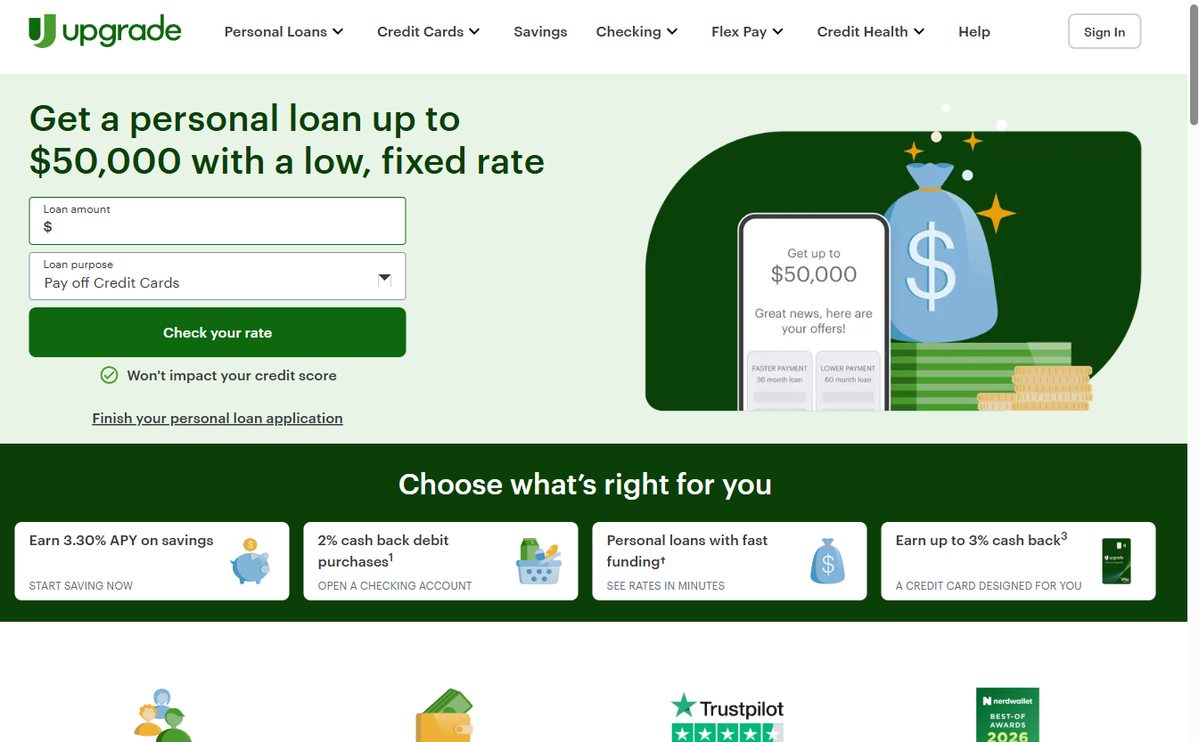
Upgrade is a heavyweight in the personal finance space, offering a suite of products that go beyond just simple loans. They provide everything from credit cards to specialized checking accounts, which can be a lifeline for someone trying to rebuild their entire financial identity from the ground up. Their ecosystem is designed to grow with the consumer; as your score improves, the products you qualify for evolve accordingly.
With loan amounts reaching up to $50,000, they offer a significant amount of breathing room. This is an excellent choice for anyone looking to consolidate high-interest debt into a single, manageable monthly payment while simultaneously working on their long-term credit health. For example, if you are carrying $15,000 in credit card debt at 24% APR, an Upgrade loan could potentially lower that interest burden, freeing up cash flow for other necessities.
Pros:
- Large loan amounts up to $50,000
- No impact on credit score when checking rates
- Fast funding options available
Cons:
- Complex product ecosystem may be overwhelming for some
3. LendingPoint

LendingPoint focuses on making the borrowing experience «easy,» which is a refreshing change for someone dealing with the stress of a low credit score. They offer a wide range of loan purposes, from medical expenses to wedding costs, showing a versatility that many lenders lack. This versatility means they are less likely to reject you based on «unconventional» uses of funds, provided you meet their income requirements.
The ability to borrow between $1,000 and $36,500 makes them a middle-ground option. They are ideal for the consumer who needs more than a small micro-loan but does not quite need the massive ceiling offered by some of the larger national banks. Their digital interface is highly intuitive, making it easy to track your payment schedule and see exactly how much interest you are accruing each month.
Pros:
- Broad range of loan purposes
- No credit score impact to check rates
- Loan amounts up to $36,500
Cons:
- Approval is not guaranteed for the lowest credit tiers
4. Avant
Avant understands that everyone’s financial journey is unique and often messy. They aim to provide tools and solutions that help people move forward, rather than just judging them for where they currently stand on a credit report. This philosophy is reflected in their underwriting, which looks at the «why» behind the score, acknowledging that a single period of unemployment or a medical crisis shouldn’t permanently bar you from financial assistance.
Their approach is built around flexibility and support. If you are looking for a lender that views you as a person rather than just a number on a spreadsheet, Avant’s philosophy might resonate with your current situation as you work toward stability. Their platform is designed to be user-friendly, offering clear insights into your loan terms so there are no surprises when the first payment is due.
Pros:
- Flexible choices for different life stages
- Friendly support and user-friendly tools
- Focus on long-term financial movement
Cons:
- May have stricter requirements than some specialized lenders
5. OneMain Financial
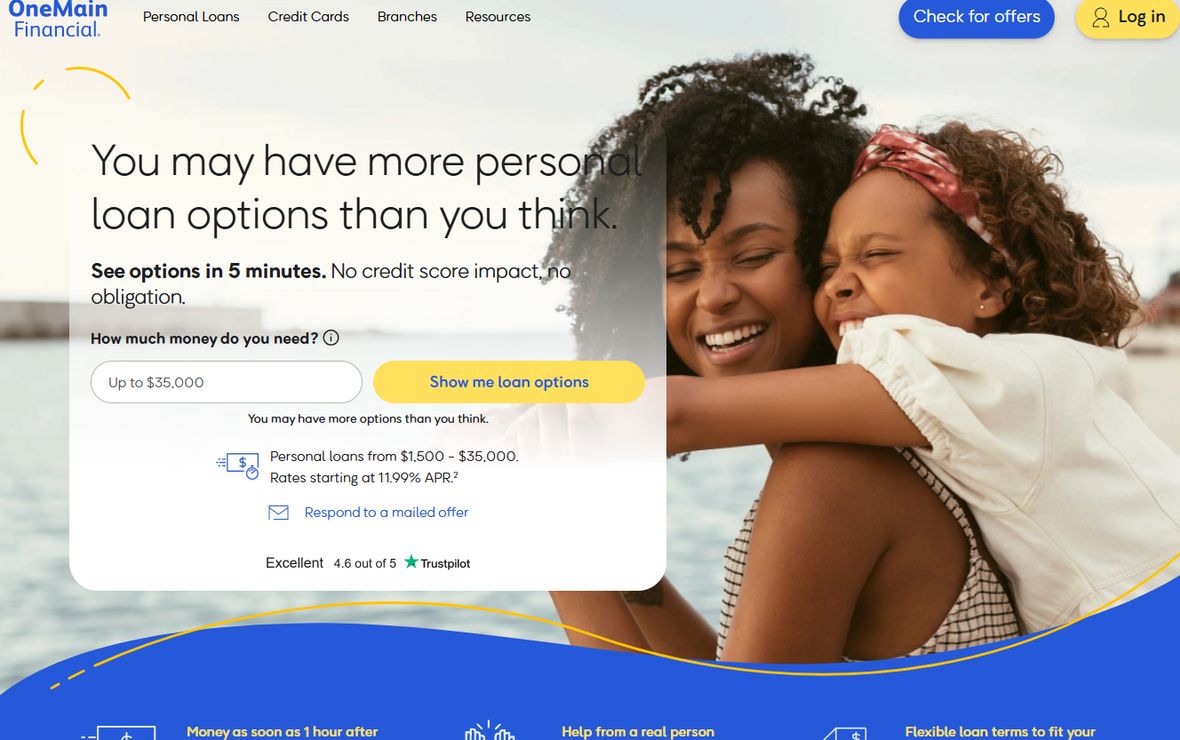
OneMain Financial stands out because of its physical presence. With over 1,300 branches, they offer a level of human interaction that online-only lenders simply cannot match. This is vital for those who prefer sitting down with a real person to discuss their options, especially if they feel uncomfortable navigating complex financial terminology on a screen. Having a local representative can help demystify the terms of the loan.
Their speed is impressive, with money potentially available just one hour after signing. This makes them a premier choice for urgent situations where you need to know exactly where you stand with a professional advisor in person. If you have collateral, such as a vehicle title, they can often leverage that to provide much better terms than a purely unsecured loan would allow.
Pros:
- Access to physical branches for in-person help
- Extremely fast funding (as soon as 1 hour)
- Flexible terms from 24 to 60 months
Cons:
- Interest rates can be higher depending on credit profile
6. OppLoans
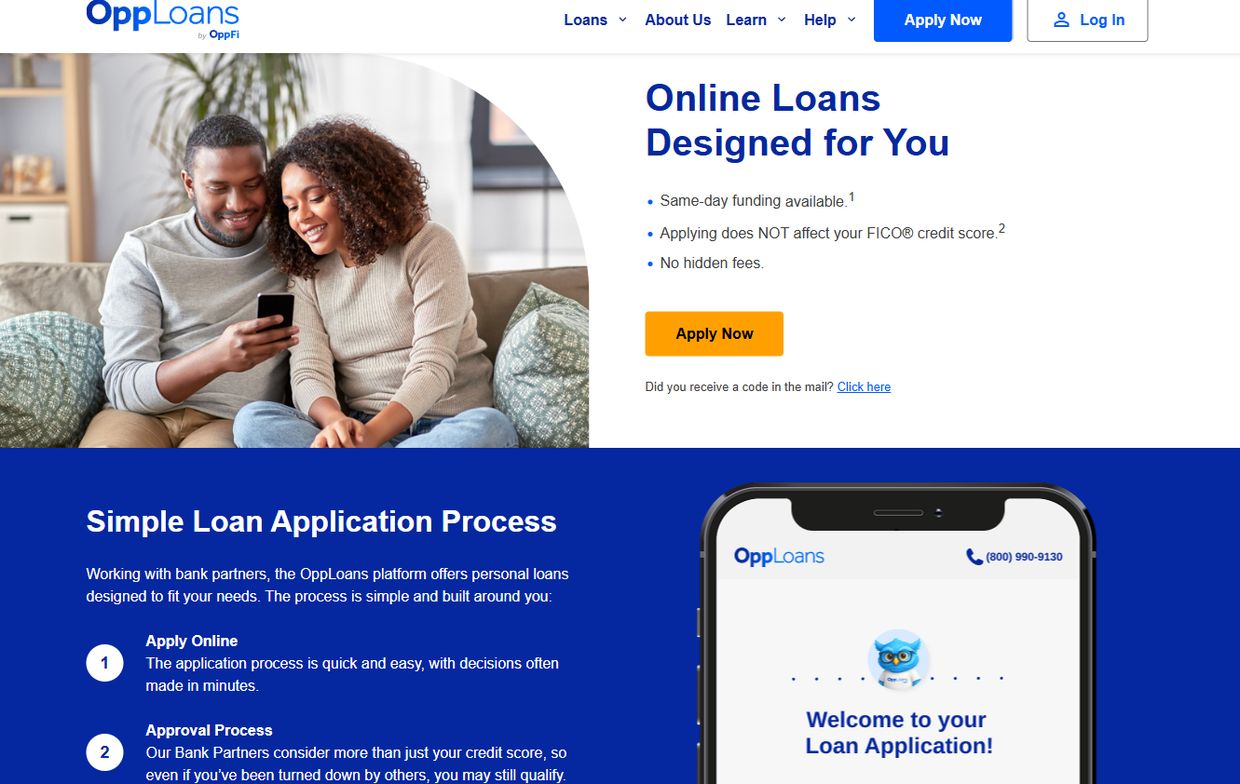
OppLoans is designed specifically for those who have been turned down elsewhere. They look at more than just the FICO score, which is a massive advantage for someone sitting at a 500 score. They are the «safety net» option for many borrowers, focusing on the likelihood of repayment based on a combination of factors like income stability and recent banking history rather than just a mathematical credit score.
The platform is built for speed and simplicity, offering same-day funding in many cases. If you are in a bind and need immediate cash without the heavy impact of a hard credit inquiry, this is a strong contender to investigate. However, it is important to use this as a short-term solution rather than a long-term debt management strategy due to the interest structures involved.
Pros:
- Same-day funding available
- Does not affect FICO score to apply
- Considers factors beyond just credit score
Cons:
- Typically higher interest rates compared to prime lenders
7. Elite Personal Finance
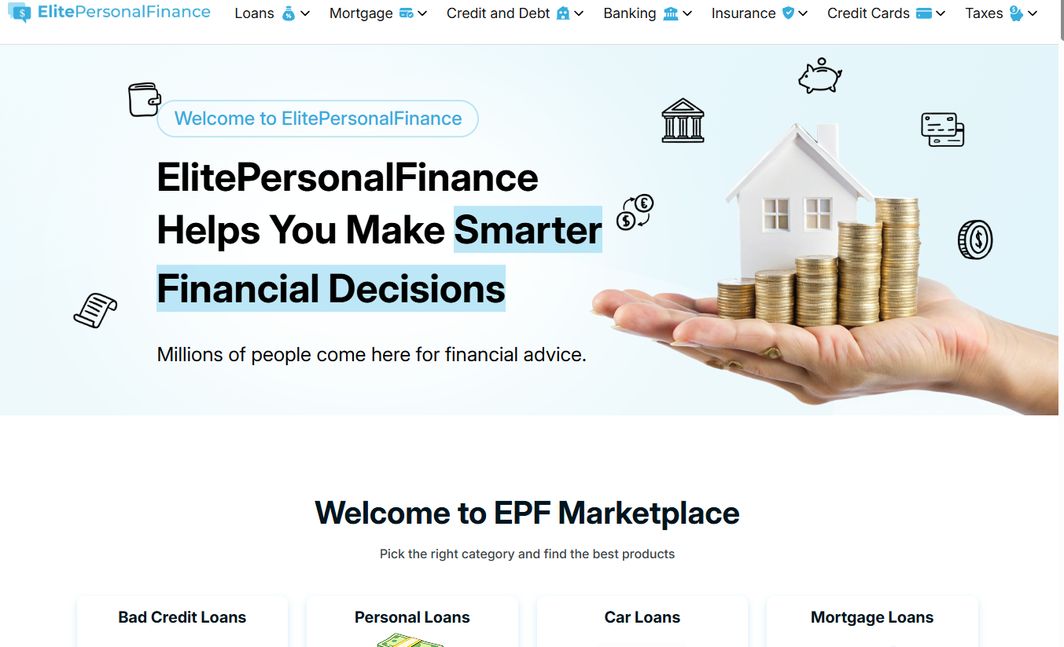
Elite Personal Finance operates as a marketplace, helping users find the right category for their specific needs. They are particularly notable for their «bad credit» loan segment, which specifically targets the 400 to 500 score range. By acting as a bridge to various lenders, they save you the time of applying to multiple companies individually, which could otherwise result in multiple hard inquiries.
For those who are struggling with the predatory nature of payday loans—which can often feature APRs exceeding 400%—this lender offers a legitimate, regulated alternative. They provide a way to get up to $5,000 with relatively predictable APRs, acting as a bridge to better credit in the future. This is a crucial distinction: a high-interest personal loan is much safer than a payday loan, which can trap you in a cycle of endless renewals.
Pros:
- Specifically targets the 400-500 credit score range
- Quick 5-minute approval process
- Alternative to high-cost payday loans
Cons:
- Loan amounts are relatively low compared to others
Understanding the Total Cost of Borrowing
When you are dealing with a 500 credit score, the «sticker price» of a loan—the interest rate—is only part of the story. To truly understand the impact on your wallet, you must calculate the total cost of the loan. This includes the principal amount, the total interest paid over the life of the loan, and any administrative or origination fees. For example, a $3,000 loan with a 36% APR over 36 months will result in a total repayment of nearly $4,800. That $1,800 difference is the real price of the credit.
Common fees to look for in the fine print include:
- Origination Fees: Often deducted from the loan amount before you receive it. If you borrow $2,000 but have a 5% origination fee, you only receive $1,900, but you still owe interest on the full $2,000.
- Prepayment Penalties: Some lenders charge a fee if you try to pay the loan off early. This is counterintuitive; paying a loan off early should save you money, not cost you more. Avoid lenders with these clauses if possible.
- Late Payment Fees: While common, frequent late fees can further damage your credit score, negating any progress you’ve made.
Step-by-Step: How to Secure a Loan with Low Credit
If you are ready to apply, following a structured approach can increase your chances of approval and ensure you get the best possible terms available in the subprime market.
- Audit Your Report: Before applying, pull your free credit report from AnnualCreditReport.com. Ensure there are no errors, such as a debt that isn’t yours or an incorrectly reported late payment. Disputing an error can sometimes jump your score just enough to move you into a different lending tier.
- Gather Documentation: Lenders looking beyond FICO will want proof of stability. Have your last three months of bank statements, your two most recent pay stubs, and a government-issued ID ready. If you are self-employed, have your most recent 1099 or tax return available.
- Compare «Soft» Offers: Use the lenders listed above to check your eligibility using «soft pull» options. This allows you to see your potential APR and loan amount without the risk of a hard inquiry.
- Analyze the Repayment Plan: Once you have an offer, use a simple loan calculator to see your monthly payment. If that payment takes up more than 15-20% of your monthly take-home pay, the loan may be too risky for your current budget.
- Verify the Terms: Before signing the digital contract, look for the «Truth in Lending» disclosure. This is a standardized box required by law that clearly states the APR, the finance charge, the total of all payments, and the total amount you will have paid back.
Navigating the Borrowing Process
The most common mistake people make when dealing with a 500 credit score is rushing into the first offer they receive. It is easy to get caught up in the relief of being approved, but you must look at the total cost of the loan. A low monthly payment might look attractive, but it often masks a much longer term that results in paying thousands more in interest. Always ask yourself: «Am I paying for the convenience of the money, or am I paying for the necessity of the money?»
Another pitfall is failing to compare the different ways lenders evaluate you. Some lenders only care about your score, while others look at your bank statements and employment history. If you have a low score but a steady job, you should lean toward lenders that prioritize income over a single number. Always check if the inquiry is a «soft» or «hard» pull before you hit that submit button. By being methodical, you can turn a high-interest loan into a strategic tool for financial rebuilding.