

Top 5 Lenders for a 550 Credit Score Personal Loan in 2026
Last updated: 2026-11-08
Navigating the financial landscape with a 550 credit score can feel like walking through a thick fog without a flashlight. It is a challenging position, but it is far from an impossible one. Many people find themselves in this middle ground, needing quick cash for emergencies or debt consolidation while working to rebuild their standing. A 550 score often places a borrower in the «fair to poor» category, which triggers specific responses from automated lending algorithms. While high-tier banks might see a score in this range and immediately issue a rejection, specialized lenders and credit unions often view it through a lens of potential, looking at your income stability and employment history rather than just a three-digit number.
When searching for a lender, the priority shifts from finding the lowest possible interest rate to finding certainty and reliability. The goal is to secure funds without being blindsided by predatory terms or hidden fees. This ranking looks at options that cater to various needs, from simple credit building to urgent cash infusions. Whether you are trying to repair a dent in your score caused by a medical bill or you simply need to bridge the gap between paychecks, understanding the specific mechanics of these lenders is essential for your financial survival.
- Allegiance Credit Union
- FastLendGo
- Coast Line Credit Union
- MaxCash
- Acorn Finance
How These Lenders Were Evaluated
The evaluation process focused on accessibility and the specific needs of borrowers with fair to poor credit. Since a 550 score often limits traditional banking options, the criteria centered on how quickly a lender provides answers and what types of products they offer to those rebuilding their lives. Speed and transparency are the names of the game here. We looked beyond the marketing slogans to examine the actual utility of the products offered to someone in a subprime or near-prime credit situation.
Each entry was scrutinized based on the provided service descriptions and their ability to serve the «fair credit» demographic. The comparison considers loan amounts, specialized products like credit builders, and the ease of the application process. We specifically analyzed whether a lender uses «hard» or «soft» credit inquiries during the initial phase, as this is a critical distinction for someone trying to protect a fragile score. This ensures that a borrower knows exactly what kind of tool they are picking up before they sign anything.
| Lender Name | Loan Amounts | Key Feature | Credit Focus |
|---|---|---|---|
| Allegiance Credit Union | See site | Credit Builder Loan | Rebuilding focus |
| FastLendGo | $500 – $5,000 | Fast comparison | Bad/Fair credit |
| Coast Line Credit Union | See site | Online Banking | General banking |
| MaxCash | $250 – $10,000+ | Quick relief | Bad credit/Title loans |
| Acorn Finance | See site | Contractor financing | Good & Bad credit |
Understanding the Impact of Your Score on Loan Terms
Before diving into specific lenders, it is vital to understand what a 550 score actually means for your wallet. Interest rates are essentially the «price» of risk. Because a score of 550 indicates a higher statistical probability of default, lenders will charge a premium to offset that risk. When you compare lenders, you will notice a massive spread in APRs (Annual Percentage Rates). A borrower with a 750 score might see rates as low as 6%, while a borrower with a 550 score might see rates starting at 25% or even higher.
This disparity can be overwhelming, but it is not a death sentence. The key is to differentiate between «revolving debt» (like credit cards) and «installment debt» (like personal loans). Many borrowers with a 550 score find success by using an installment loan to pay off multiple high-interest credit cards. This can lower their credit utilization ratio—one of the biggest components of your FICO score—which can lead to a rapid upward movement in the score itself. However, if you use a high-interest loan to pay for lifestyle expenses rather than debt consolidation, you may find yourself in a debt spiral that is even harder to escape than your original situation.
The Best Options for Rebuilding and Quick Cash
1. Allegiance Credit Union
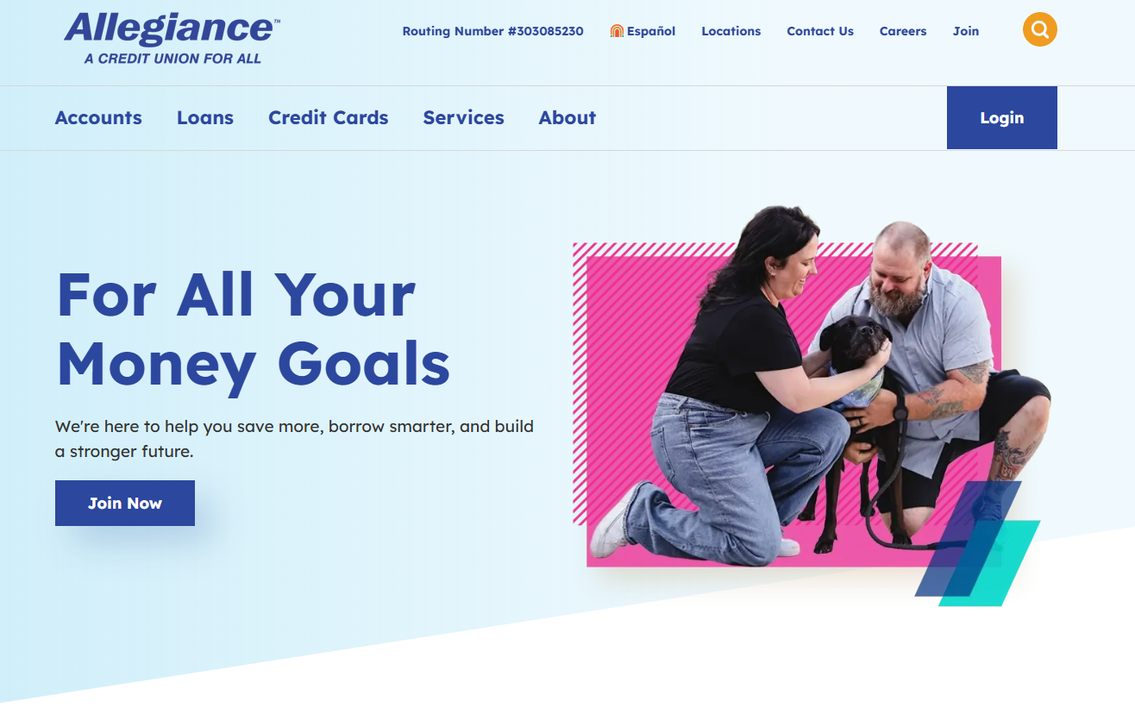
Allegiance Credit Union stands out for those who view a 550 score as a temporary setback rather than a permanent label. They offer a specialized Credit Builder Loan with a 9.99% APR, which is a fantastic tool for anyone looking to climb out of the credit trenches. Unlike a standard loan where you receive the cash upfront, a credit builder loan often places the funds in a locked savings account. You then make monthly payments toward that account. Once the loan is paid off, you receive the money, and your credit report shows a history of consistent, on-time payments. This is a strategic way to manufacture a positive credit history without the risk of traditional debt.
This institution seems to care about the human element of banking. They emphasize that every story matters, whether you are saving for a first home or recovering from a financial stumble. For those who want a partner to help them save more and borrow smarter, this is a solid choice for the long haul. They focus on the «why» behind your financial journey, which is a refreshing departure from the impersonal, algorithmic nature of large national banks.
Pros:
- Specialized Credit Builder Loans available to boost FICO scores.
- Highly competitive rates on certain secured products.
- Focus on long-term financial health and stability.
Cons:
- Membership requirements (such as living in a specific area or joining an association) may apply.
2. FastLendGo
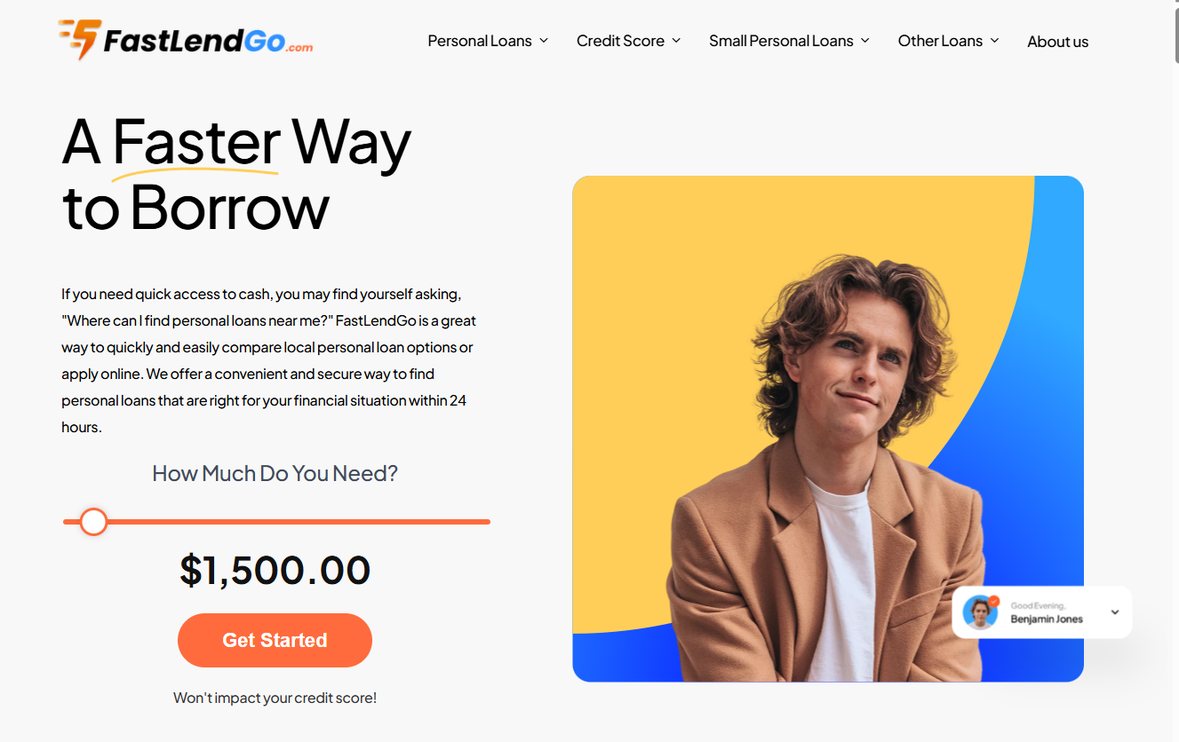
If you find yourself staring at a broken radiator or a dental bill, FastLendGo is designed for that exact moment of panic. They act as a bridge, helping you compare local personal loan options quickly. Their platform is built for speed, making it a strong contender for those who need cash in a pinch. Rather than forcing you to apply to dozens of different banks individually, they aggregate options, which saves you the time and effort of managing multiple applications.
They cover a wide spectrum of needs, from small $500 loans for emergency repairs to larger $5,000 amounts for debt consolidation or medical expenses. Because they cater to bad, fair, and good credit, a 550 score won’t necessarily slam the door shut. Instead, it acts as a starting point for the comparison engine. It is a versatile option for anyone needing to navigate the «near me» search for immediate liquidity when traditional banking channels have failed.
Pros:
- Wide range of loan amounts to fit various emergency scenarios.
- Fast comparison of multiple local and national options.
- Covers various emergency needs from auto repair to medical bills.
Cons:
- Interest rates for bad credit can vary significantly depending on the lender matched.
3. Coast Line Credit Union
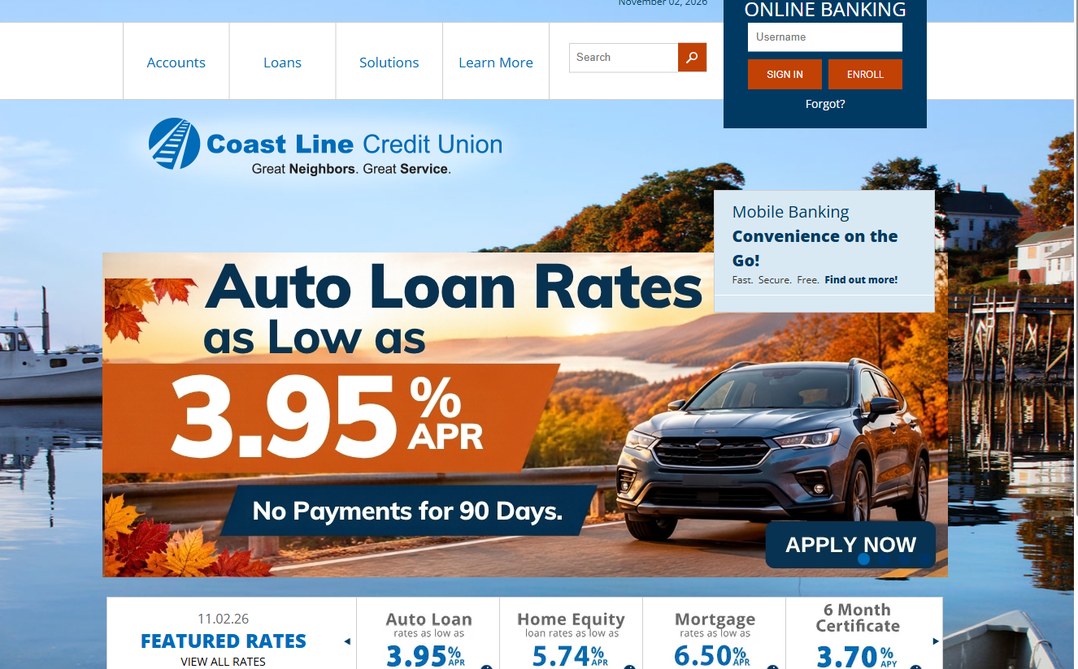
Coast Line Credit Union offers a more traditional banking experience through their digital and mobile platforms. For a borrower with a 550 score, having access to secure online banking and streamlined loan applications is a significant convenience. Credit unions are member-owned cooperatives, which means their primary goal is to serve their members rather than maximize profits for outside shareholders. This often translates to more flexible underwriting criteria for people with less-than-perfect credit histories.
While they offer a variety of solutions, their primary strength lies in their established infrastructure. If you are looking for a place to manage your daily finances—checking, savings, and direct deposit—while simultaneously working on your loan needs, their digital tools make the process relatively seamless and secure. It is an excellent choice for someone looking to transition from «surviving» with high-interest payday loans to «managing» with a stable, community-based financial institution.
Pros:
- Secure and convenient mobile banking for real-time monitoring.
- Established credit union stability and community-focused mission.
- Streamlined online application process for various products.
Cons:
- May require specific membership criteria or geographic residency.
4. MaxCash
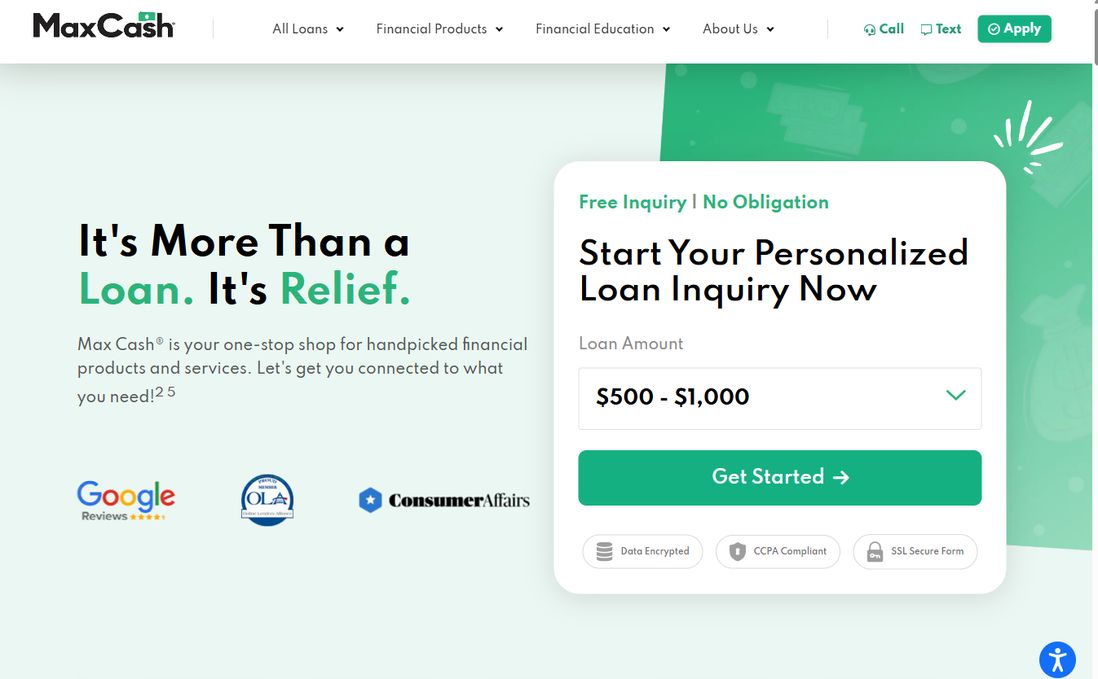
MaxCash operates with a sense of urgency that is hard to beat. They position themselves as a source of «relief» rather than just another lender. For someone with a 550 credit score, the ability to request a personalized loan inquiry quickly can be a massive weight off the shoulders. They understand that financial crises don’t wait for a 30-day approval window; they happen on a Tuesday afternoon when an unexpected bill arrives.
Their product list is extensive, ranging from small cash advances to much larger installment loans that can be used for significant life events. They even offer title loans, which might be necessary for those in extreme circumstances where no other credit is available. Because they deal with a wide variety of credit profiles, their interface is designed to give you an idea of your options without a lengthy, drawn-out process. It is a one-stop shop for those who need to see what is possible immediately.
Pros:
- Very wide range of loan amounts and product types.
- Quick, personalized loan inquiries to save time.
- Multiple product types available, including installment and title options.
Cons:
- Title loans involve much higher risks as they are secured by your vehicle.
5. Acorn Finance
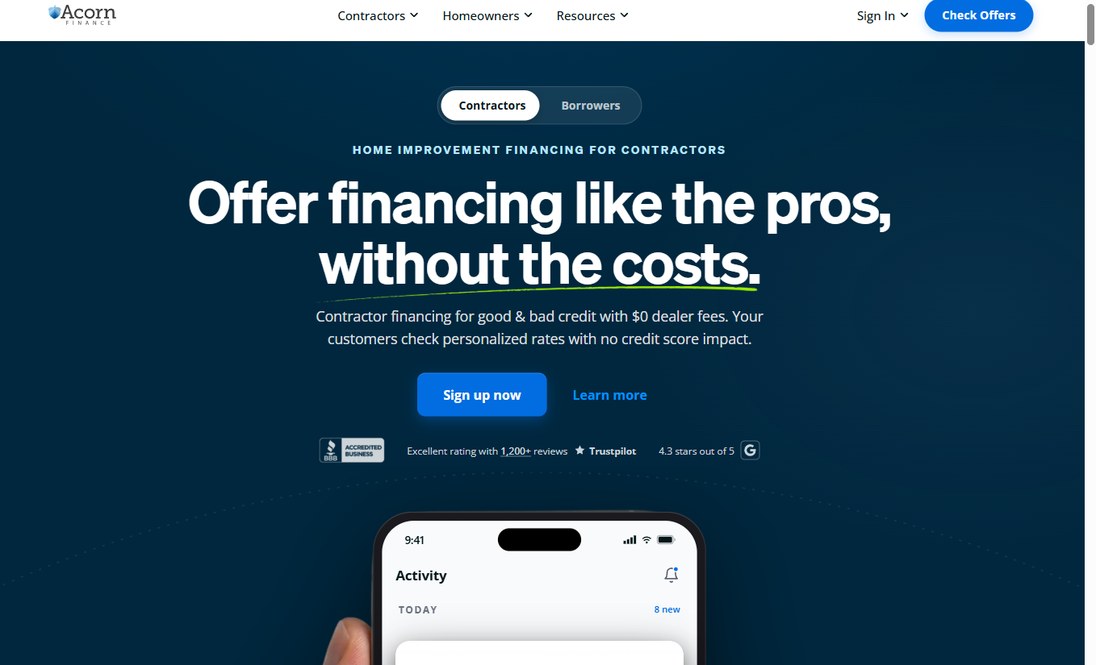
Acorn Finance is a unique player, specifically targeting the home improvement niche. If your 550 score is standing between you and a much-needed kitchen remodel, a new roof, or an HVAC system, this is a specialized route to explore. Home improvements can actually increase the value of your property, which is a smart long-term investment, but getting the financing is often the hardest part for those with subprime credit.
What makes them interesting is their «100% Free» approach for contractors and the ability to check rates without a credit score impact. This «soft pull» mechanism is vital for someone with a 550 score. Every time you apply for a loan and a lender does a «hard pull,» your score can drop by a few points. Acorn Finance allows you to shop around and compare different home improvement financing options without the fear of dropping your score even further during the inquiry phase.
Pros:
- No credit score impact for checking rates (soft inquiry).
- Specialized for home improvement and contractor-related projects.
- High user ratings and transparency on Trustpilot.
Cons:
- Niche focus may not suit general debt needs or personal cash flow issues.
A Step-by-Step Guide to Applying with a 550 Score
Applying for credit when your score is low requires a more tactical approach than it does for those with pristine credit. Follow these steps to maximize your chances of approval and minimize the damage to your score:
- Audit Your Report First: Before you apply anywhere, download your free credit report from AnnualCreditReport.com. Look for errors, such as accounts that aren’t yours or late payments that you actually paid on time. Disputing these errors is the fastest way to boost a 550 score before you even talk to a lender.
- Check for «Soft Pull» Options: Always look for lenders that offer «pre-qualification» with a soft credit pull. This allows you to see your estimated interest rate and loan amount without the risk of a hard inquiry hitting your report.
- Gather Your Documentation: Lenders looking at fair-to-poor credit will scrutinize your ability to repay. Have your last three months of pay stubs, bank statements, and proof of residency ready. The faster you can provide these, the faster you move through their underwriting process.
- Compare the APR, Not Just the Monthly Payment: This is a common trap. A loan might have a low monthly payment because the term is very long (e.g., 60 months), but the total interest you pay over the life of the loan could be astronomical. Always look at the Annual Percentage Rate (APR) as the true measure of the loan’s cost.
Avoiding Common Pitfalls
When you are operating with a 550 credit score, the temptation to grab the first offer you see is incredibly high. However, speed shouldn’t come at the cost of understanding the fine print. Always look for the total cost of borrowing, which includes interest plus any origination fees or prepayment penalties. Some lenders will charge you a 5% fee just for processing the loan; if you borrow $1,000, you might only see $950 in your bank account, even though you owe $1,000 plus interest.
One major mistake is ignoring the difference between a personal loan and a title loan. A personal loan is typically unsecured, meaning it is backed by your promise to pay. A title loan is secured by your vehicle. If you cannot make payments, the lender can repossess your car. For many, losing their vehicle means losing their ability to get to work, which creates a catastrophic cycle of poverty. Only use title loans as an absolute last resort.
Finally, remember that a low credit score is a snapshot of the past, not a crystal ball for your future. Using a credit builder loan or a small personal loan to consolidate high-interest debt can actually help lift that score over time. Approach borrowing as a tool for growth, not just a temporary band-aid. Every on-time payment you make is a brick in the foundation of a new, stronger financial life.